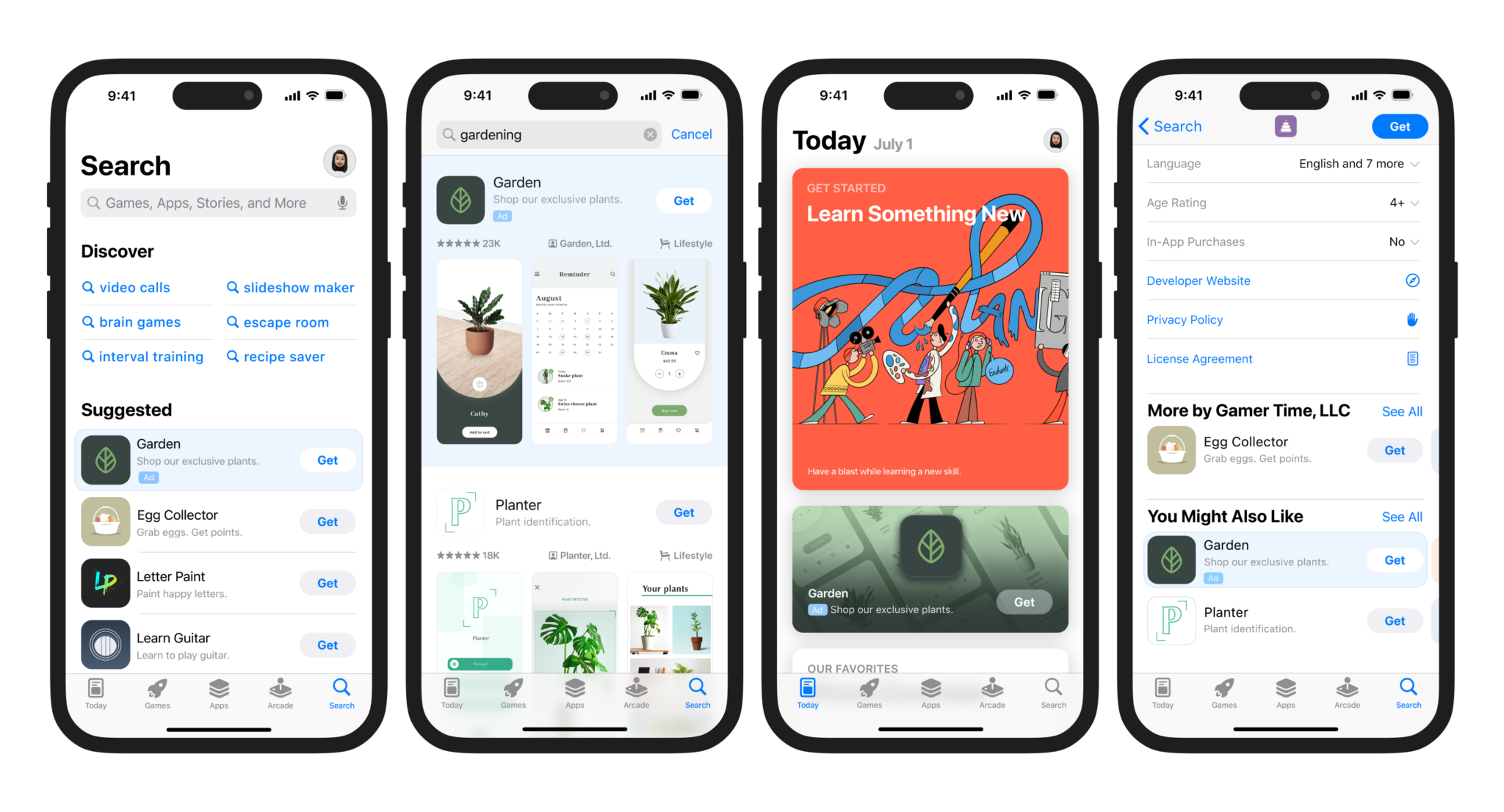
Mobile App Advertising
Mobile app advertising has evolved into one of the most powerful monetization and growth channels in digital business. With billions of people spending hours each day inside apps—from social platforms to gaming, shopping, and streaming—mobile environments offer unmatched attention and targeting precision. But showing ads to mobile app users is not simply about inserting banners and hoping for clicks. The best-performing strategies balance user experience, data intelligence, creative optimization, and revenue goals.
This in-depth guide explains how to best show ads to mobile app users—whether you are monetizing your own app or running campaigns to acquire and engage customers.
Understand the Mobile App Environment
Mobile apps are not mobile websites.
Apps are:
-
Personal
-
Habit-driven
-
Full-screen
-
Often used in short bursts
Unlike desktop advertising, mobile app ads compete directly with the user’s immediate focus. That means poorly placed ads feel intrusive very quickly.
Before launching ads, ask:
-
What is the core user journey?
-
When are users most engaged?
-
Where does friction naturally occur?
-
What moments feel interruptible?
For example, a casual gaming app can naturally place ads between levels. A meditation app cannot.
The first rule: respect context.
Choose the Right Ad Format
Not all ad formats perform equally. Selecting the right one is foundational.
1. Banner Ads
Small display ads at the top or bottom of the screen.
Pros:
-
Non-disruptive
-
Easy to implement
Cons:
-
Low engagement
-
“Banner blindness”
Best used for:
-
Utility apps
-
Background revenue streams
2. Interstitial Ads
Full-screen ads shown at natural transition points (e.g., level completion, article end).
Pros:
-
High visibility
-
Strong CPM rates
Cons:
-
Disruptive if mistimed
Best practice:
Show them during natural pauses, never mid-action.
3. Rewarded Video Ads
Users voluntarily watch ads in exchange for in-app rewards.
Pros:
-
Very high completion rates
-
Positive user sentiment
-
High revenue per impression
Common in gaming apps, but increasingly effective in other categories.
Rewarded ads are often served via networks like AdMob and Unity Ads.
4. Native Ads
Ads designed to match the look and feel of app content.
Pros:
-
Less intrusive
-
Higher engagement
-
Better UX
Native ads work particularly well in social, news, and content-heavy apps.
Platforms like Meta and Google provide robust native ad integrations for mobile environments.
5. Playable Ads
Interactive ad experiences allowing users to test a game or product preview.
Pros:
-
Extremely engaging
-
High conversion rates
-
Strong for app install campaigns
Especially powerful in mobile gaming acquisition.
Optimize Ad Timing
Timing determines whether ads feel natural or annoying.
Avoid:
-
Showing ads immediately after app launch
-
Interrupting active user input
-
Displaying ads during onboarding
Instead:
-
Show ads after task completion
-
Use behavioral triggers
-
Base frequency on session length
For example:
If average session time is 3 minutes, showing 4 interstitial ads will destroy retention.
A good starting rule:
One interstitial per 3–5 minutes of active engagement.
Test and adjust based on retention impact.
Personalize with Smart Targeting
Modern mobile advertising depends on personalization.
You can target based on:
-
Behavior inside the app
-
Purchase history
-
Device type
-
Geography
-
Session frequency
-
Engagement level
Ad networks like AppLovin and ironSource specialize in advanced mobile user segmentation.
For example:
-
High-value users may see premium brand ads.
-
Inactive users may see re-engagement promotions.
-
First-time users may see fewer ads.
The key is aligning ad intensity with user lifecycle stage.
Balance Revenue and Retention
Aggressive monetization often increases short-term revenue but harms long-term growth.
Track these metrics carefully:
-
ARPDAU (Average Revenue Per Daily Active User)
-
Retention (Day 1, Day 7, Day 30)
-
Session length
-
Churn rate
-
Lifetime Value (LTV)
If revenue increases but retention drops significantly, your ad strategy is too aggressive.
Healthy apps prioritize long-term LTV over short-term ad impressions.
Frequency Capping Is Essential
Ad fatigue is real.
When users see the same ad repeatedly:
-
Engagement drops
-
Brand perception declines
-
App ratings suffer
Use frequency caps such as:
-
2–3 interstitials per session
-
1 rewarded ad offer every X minutes
-
Unique creative rotation
Ad networks like Chartboost allow granular frequency management.
Smart frequency management protects user experience while maintaining revenue.
Use Mediation to Maximize Fill and CPM
Relying on a single ad network limits revenue potential.
Ad mediation platforms aggregate multiple networks and automatically serve the highest-paying ad for each impression.
Examples include:
Benefits:
-
Higher fill rates
-
Better CPM optimization
-
Reduced dependency on one demand source
For large apps, mediation can significantly increase monetization efficiency.
Optimize Creative for Mobile Behavior
Mobile users scroll fast and decide quickly.
Effective mobile ad creatives:
-
Use bold visuals
-
Have minimal text
-
Include clear CTAs
-
Load quickly
-
Are optimized for vertical viewing
Vertical video ads (9:16) typically outperform horizontal formats.
Short-form video (6–15 seconds) often performs best.
Always test multiple creative variants.
Prioritize Load Speed
Ad latency kills user experience.
If ads load slowly:
-
Screens freeze
-
UX feels broken
-
Users exit the app
Work with networks that optimize for fast SDK performance and minimize app bloat.
Regularly test app performance after integrating ad SDKs.
App crashes due to ad integration can severely damage ratings in app stores. Remember, Prioritize Speed.
Comply with Privacy Regulations
Privacy laws impact mobile advertising significantly.
Key considerations:
-
User consent (GDPR, CCPA)
-
App Tracking Transparency (ATT) on iOS
-
Data transparency
-
Opt-out options
Apple’s App Tracking Transparency framework, changed how advertisers collect user data on iOS devices.
Ensure your consent flow is:
-
Clear
-
Transparent
-
Easy to manage
Non-compliance can lead to app removal or penalties.
A/B Test Ad Strategies
Never assume your first setup is optimal.
Test variables such as:
-
Ad format mix
-
Placement
-
Timing
-
Frequency
-
Reward value (for rewarded ads)
-
Creative types
Run controlled experiments:
-
Group A sees 1 interstitial
-
Group B sees 2
-
Group C sees none
Compare revenue vs retention impact.
Data—not assumptions—should drive decisions.
Use Predictive Models for High-Value Users
Advanced apps use predictive modeling to identify users likely to churn or spend.
For example:
-
Users predicted to spend may see fewer ads.
-
Users unlikely to convert to paying customers may see more ads.
-
Churn-risk users may see lighter monetization.
This approach maximizes both ad revenue and in-app purchase revenue.
Many enterprise-level solutions integrate machine learning models to automate this optimization.
Protect Brand and User Safety
If you monetize your app, ensure ads are brand-safe and appropriate.
Poor-quality ads:
-
Damage your app’s reputation
-
Increase uninstalls
-
Reduce ratings
Enable:
-
Content category blocking
-
Competitor blocking
-
Creative review filters
Most major networks provide brand safety controls.
Consider Hybrid Monetization Models
The best mobile apps rarely rely on ads alone.
Combine:
-
In-app purchases
-
Subscriptions
-
Ads
For example:
-
Offer an ad-free subscription tier.
-
Use rewarded ads instead of forced interstitials.
-
Allow users to remove ads for a small fee.
Hybrid monetization often yields higher lifetime value than ad-only models.
Monitor Store Ratings and Feedback
Users will tell you if ads are too aggressive.
Watch:
-
App Store reviews
-
Google Play reviews
-
Social feedback
If you see repeated complaints about ads, take them seriously.
Long-term brand equity is more important than short-term ad spikes.
Build a Sustainable Monetization Framework
The best ad strategies are:
-
Context-aware
-
Data-driven
-
User-centric
-
Technically optimized
Think of advertising as a feature of your app—not an afterthought.
Ask:
Does this ad improve the business without harming the experience?
If the answer is no, adjust.
An Art & A Science
Showing ads to mobile app users is both an art and a science.
The most successful apps:
-
Respect user attention
-
Place ads at natural breaks
-
Offer rewarded formats
-
Personalize intelligently
-
Use mediation
-
Monitor retention carefully
-
Continuously test and optimize
Mobile app advertising done poorly drives users away. Done correctly, it becomes a sustainable revenue engine that supports product development, growth, and long-term profitability.
The goal is simple:
Maximize lifetime value without sacrificing user experience.
When you align monetization with user satisfaction, advertising stops feeling like an interruption—and starts feeling like a natural part of the app ecosystem.