The Growth Strategy Most Brands Overlook
In the early stages of a business, growth often feels synonymous with acquisition.
More traffic.
More leads.
More customers.
Marketing dashboards fill with metrics like cost per click, conversion rate, and new customer volume. Teams celebrate spikes in signups and first-time purchases.
But sustainable growth does not come from acquisition alone.
It comes from retention — and the compounding impact of customer lifetime value.
Retention and lifetime value (LTV) are not just performance metrics. They are strategic pillars. They determine profitability, resilience, brand strength, and long-term scalability.
This article explores why retention matters, how lifetime value transforms marketing strategy, and how to design systems that maximize both.
The Real Economics of Growth
Acquiring a customer is expensive.
Whether through paid ads, content marketing, partnerships, or outbound sales, customer acquisition requires:
-
Time
-
Budget
-
Creative effort
-
Operational resources
When a customer buys once and never returns, the economics are fragile. Margins shrink. Profitability becomes dependent on constant acquisition.
Retention changes the equation.
When customers return:
-
Acquisition costs are amortized.
-
Revenue compounds.
-
Marketing efficiency improves.
-
Brand equity strengthens.
The longer a customer stays, the more profitable they become.
What Is Retention?
Retention measures how well a business keeps its customers over time.
Depending on the model, retention might mean:
-
Repeat purchases (ecommerce)
-
Subscription renewals (SaaS)
-
Ongoing engagement (apps, communities)
-
Contract extensions (B2B services)
Retention is often expressed as:
-
Retention rate
-
Churn rate
-
Repeat purchase rate
-
Customer longevity
High retention signals value. Low retention signals friction, dissatisfaction, or misalignment.
Retention is the ultimate feedback loop.
What Is Customer Lifetime Value?
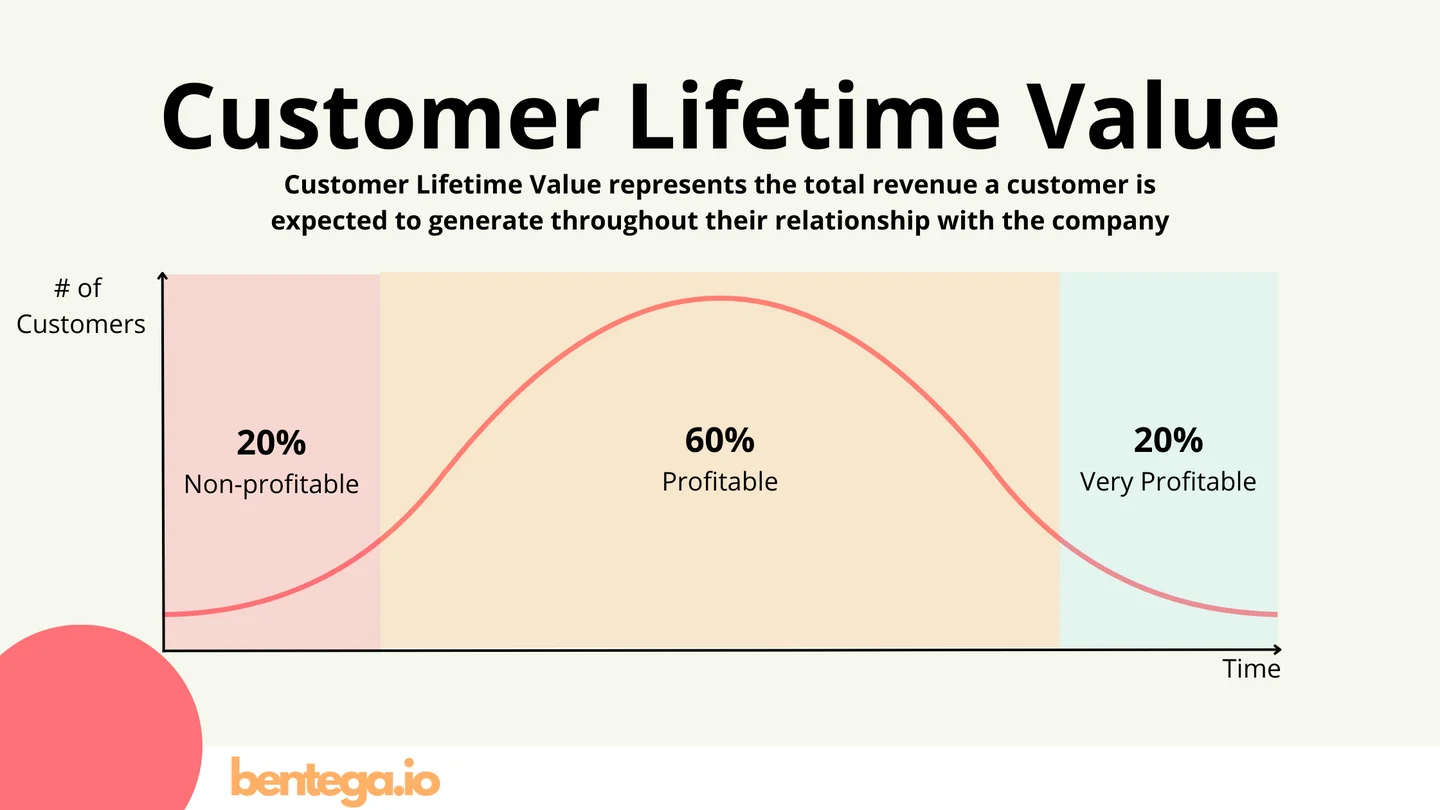
Customer lifetime value (LTV or CLV) estimates the total revenue a business can expect from a customer over the duration of their relationship.
A simplified formula:
LTV = Average Purchase Value × Purchase Frequency × Customer Lifespan
For subscription businesses:
LTV = Average Revenue per User × Average Retention Duration
Lifetime value reframes marketing decisions.
Instead of asking:
“How much did we make from this sale?”
You ask:
“How much will this relationship be worth over time?”
This shift changes everything.
Why Retention Is More Powerful Than Acquisition
Acquisition drives entry. Retention drives scale.
Consider two businesses:
-
Company A acquires 1,000 customers per month but loses 40% within 30 days.
-
Company B acquires 500 customers per month but retains 85% long term.
Over time, Company B outpaces Company A in total revenue, profitability, and stability.
Retention improves:
-
Revenue predictability
-
Marketing ROI
-
Brand trust
-
Word-of-mouth growth
-
Operational efficiency
In many industries, increasing retention by just 5% can dramatically increase profitability.
Retention Reduces Customer Acquisition Pressure
When retention is low, marketing teams must constantly refill the funnel.
This creates pressure to:
-
Increase ad spend
-
Expand targeting
-
Lower qualification standards
-
Run frequent promotions
This cycle often reduces margins and attracts lower-quality customers.
Strong retention reduces dependency on constant acquisition.
Marketing becomes more strategic and less reactive.
The Relationship Between Retention and CAC
Customer acquisition cost (CAC) is only sustainable when paired with LTV.
If:
-
CAC = $100
-
First purchase = $120
Margins are thin.
But if:
-
Lifetime value = $600
The acquisition cost becomes highly justifiable.
High LTV allows businesses to:
-
Outbid competitors
-
Invest more aggressively in marketing
-
Expand into new channels
-
Offer better incentives
Retention expands your competitive advantage.
Why Customers Stay (and Why They Leave)
Retention is not accidental. It is influenced by:
-
Product value
-
Customer experience
-
Emotional connection
-
Brand trust
-
Ongoing relevance
Customers leave because:
-
Expectations weren’t met.
-
Communication feels irrelevant.
-
Value declines.
-
Competitors offer better alternatives.
-
They feel forgotten after purchase.
Retention begins with understanding these drivers.
The Role of Marketing in Retention
Retention is often treated as a product or customer service issue. But marketing plays a central role.
Marketing influences:
-
Onboarding communication
-
Post-purchase education
-
Value reinforcement
-
Community building
-
Loyalty programs
-
Personalization
-
Upsell and cross-sell messaging
Retention-focused marketing is proactive, not promotional.
It reinforces value continuously.
Designing a Retention Strategy
A retention strategy should be intentional and measurable.
Here’s how to structure one.
1. Optimize the First Experience
Retention starts immediately after acquisition.
The first 30 days often determine long-term behavior.
Key elements include:
-
Clear onboarding communication
-
Educational resources
-
Quick wins
-
Friction reduction
-
Setting realistic expectations
If customers see value early, retention probability increases significantly.
2. Personalize Communication
Generic messaging weakens relationships.
Retention improves when communication reflects:
-
Purchase history
-
Behavior
-
Preferences
-
Engagement patterns
Examples:
-
Replenishment reminders based on usage cycles.
-
Feature education based on product adoption.
-
Cross-sell recommendations aligned with past purchases.
Relevance sustains interest.
3. Measure Engagement Signals
Engagement often predicts retention.
Track indicators like:
-
Login frequency
-
Email interaction
-
Product usage depth
-
Repeat site visits
-
Customer support interactions
Declining engagement often precedes churn.
Monitoring these signals allows early intervention.
4. Implement Retention Campaigns
Retention campaigns may include:
-
Re-engagement email sequences
-
Loyalty rewards
-
Exclusive offers
-
Educational content
-
Customer appreciation initiatives
The key is timing.
Retention messaging must align with customer lifecycle stages.
Increasing Lifetime Value Strategically
Lifetime value is influenced by three core levers:
-
Increase average order value.
-
Increase purchase frequency.
-
Increase customer lifespan.
Let’s explore each.
1. Increase Average Order Value (AOV)
Marketing can increase AOV through:
-
Bundles
-
Product recommendations
-
Limited-time upgrades
-
Tiered pricing
-
Free shipping thresholds
The goal is to increase value per transaction without damaging trust.
2. Increase Purchase Frequency
Encourage repeat purchases by:
-
Reminder campaigns
-
Subscription options
-
Loyalty programs
-
Seasonal promotions
-
Content that keeps brand top-of-mind
Reducing time between purchases increases LTV significantly.
3. Extend Customer Lifespan
This is the most powerful lever.
Customers stay longer when:
-
They feel understood.
-
They experience consistent value.
-
Problems are resolved quickly.
-
Communication remains relevant.
-
Community forms around the brand.
Longevity compounds revenue.
The Emotional Component of Retention
Retention is not just transactional.
Emotional drivers matter:
-
Trust
-
Identity alignment
-
Community
-
Recognition
-
Reliability
Brands that build emotional connection outperform those that rely solely on price.
Customers stay loyal when they feel:
-
Seen
-
Valued
-
Understood
-
Appreciated
Marketing messaging plays a key role in reinforcing these feelings.
Data-Driven Retention Marketing
Retention strategy should be informed by data.
Key metrics include:
-
Cohort retention analysis
-
Churn rate by segment
-
Lifetime value by acquisition channel
-
Repeat purchase rate
-
Net revenue retention
-
Customer satisfaction scores
Cohort analysis is especially powerful.
It allows you to compare retention across:
-
Time periods
-
Acquisition channels
-
Campaign types
-
Product lines
This reveals which marketing investments produce the highest long-term value.
Segmenting by Lifetime Value
Not all customers are equal in long-term value.
Segment customers by:
-
High LTV
-
Medium LTV
-
Low LTV
Then tailor strategy accordingly.
For example:
-
High LTV customers may receive exclusive perks.
-
Medium LTV customers may receive upsell education.
-
Low LTV customers may receive automated nurture.
Resource allocation becomes strategic.
Acquisition and Retention Must Align
One common mistake is misalignment between acquisition messaging and retention reality.
If marketing promises one thing and the product delivers another, churn increases.
Retention improves when:
-
Expectations are accurate.
-
Onboarding reinforces acquisition messaging.
-
Messaging remains consistent across touchpoints.
Acquisition without alignment increases churn.
The Compounding Effect of Retention
Retention compounds over time.
If you retain:
-
60% of customers year one
-
70% year two
-
75% year three
Revenue stability increases.
Predictability improves forecasting.
Marketing budgets can be planned more confidently.
The business becomes less volatile.
Retention and Referrals
Satisfied long-term customers drive referrals.
Retention fuels:
-
Word-of-mouth growth
-
Reviews
-
Testimonials
-
Social proof
Referral acquisition often has:
-
Lower CAC
-
Higher conversion rates
-
Higher lifetime value
Retention strengthens acquisition indirectly.
Common Retention Mistakes
Avoid these pitfalls:
1. Focusing Only on Discounts
Constant promotions train customers to wait for sales.
2. Ignoring Early Churn
First 30–90 days often reveal biggest retention leaks.
3. Overlooking Customer Feedback
Surveys and reviews highlight friction points.
4. Over-Segmenting Without Action
Data must lead to intervention.
5. Treating Retention as an Afterthought
Retention should influence strategy from the beginning.
Building a Retention-Centric Culture
Retention should not belong to one department.
It requires collaboration across:
-
Marketing
-
Product
-
Customer success
-
Sales
-
Analytics
Shared goals encourage alignment.
For example:
-
Marketing optimizes messaging.
-
Product improves usability.
-
Customer success supports adoption.
-
Analytics measures impact.
Retention becomes a company-wide priority.
Measuring Long-Term Impact
To truly embrace retention and LTV, shift reporting focus.
Instead of celebrating:
-
Monthly acquisition spikes
Also measure:
-
6-month retention
-
12-month revenue per customer
-
LTV by channel
-
Retention-adjusted CAC
Long-term metrics create disciplined growth.
The Strategic Advantage of Retention
Companies that prioritize retention:
-
Outlast competitors.
-
Survive market downturns.
-
Maintain pricing power.
-
Scale more efficiently.
-
Build stronger brand equity.
Acquisition builds momentum.
Retention builds resilience.
Retention and lifetime value are not secondary metrics.
They are the foundation of sustainable marketing.
When you focus on retention:
-
You improve profitability.
-
You reduce dependency on paid acquisition.
-
You increase marketing leverage.
-
You build long-term customer relationships.
-
You create compounding growth.
Acquisition opens the door.
Retention builds the relationship.
Lifetime value measures its impact.
The most successful brands are not those that acquire the most customers.
They are the ones that keep them — and grow with them over time.