Algorithms & User Interaction
Social media has evolved from simple digital networking platforms into sophisticated ecosystems powered by complex algorithms. These algorithms determine what billions of people see every day, shaping opinions, trends, purchasing decisions, and even cultural movements. Platforms such as Meta Platforms, Inc., TikTok, YouTube, X, and LinkedIn rely heavily on algorithmic systems to personalize content feeds.
At the heart of these systems lies a central objective: maximize user engagement. To achieve this, algorithms constantly measure, analyze, and predict user interaction patterns. Understanding how these systems gauge engagement offers insight into why certain posts go viral while others disappear unnoticed.
The Core Purpose of Social Media Algorithms
Social media algorithms are designed to curate content tailored to individual users. Rather than presenting posts chronologically, platforms prioritize content that is most likely to generate engagement.
The primary goals are:
-
Encourage repeated visits
-
Promote interaction between users
-
Boost ad visibility and revenue
Algorithms evaluate vast amounts of behavioral data in real time. Each scroll, click, like, pause, or share feeds into predictive models that refine the content ranking process.
Types of User Interactions Algorithms Measure
User interaction is multifaceted. Algorithms assess both obvious and subtle behaviors to gauge interest.
1. Active Engagement Signals
Active signals are deliberate user actions that indicate strong interest. These include:
-
Likes or reactions
-
Comments
-
Shares or reposts
-
Saves or bookmarks
-
Direct messages
-
Follows or subscriptions
For example, when a user shares a video on TikTok, the platform interprets that action as a high-value signal, often stronger than a simple like. Sharing implies endorsement and increases distribution potential.
Similarly, commenting often signals deeper engagement than liking. The algorithm may assign greater weight to longer comments, as they demonstrate cognitive investment.
2. Passive Engagement Signals
Passive signals are more subtle but equally important. These include:
-
Watch time
-
Scroll speed
-
Pause duration
-
Hover time
-
Content dwell time
On YouTube, watch time is a critical metric. Videos that keep viewers watching longer are more likely to be recommended. Even rewatches can increase content visibility.
Scroll behavior also matters. If a user slows down when viewing certain types of posts, the system registers that as interest. Quick scrolling, on the other hand, signals disinterest.
Passive data often provides more honest feedback than active engagement because it reflects natural behavior rather than intentional interaction.
Ranking Systems: How Content Is Prioritized
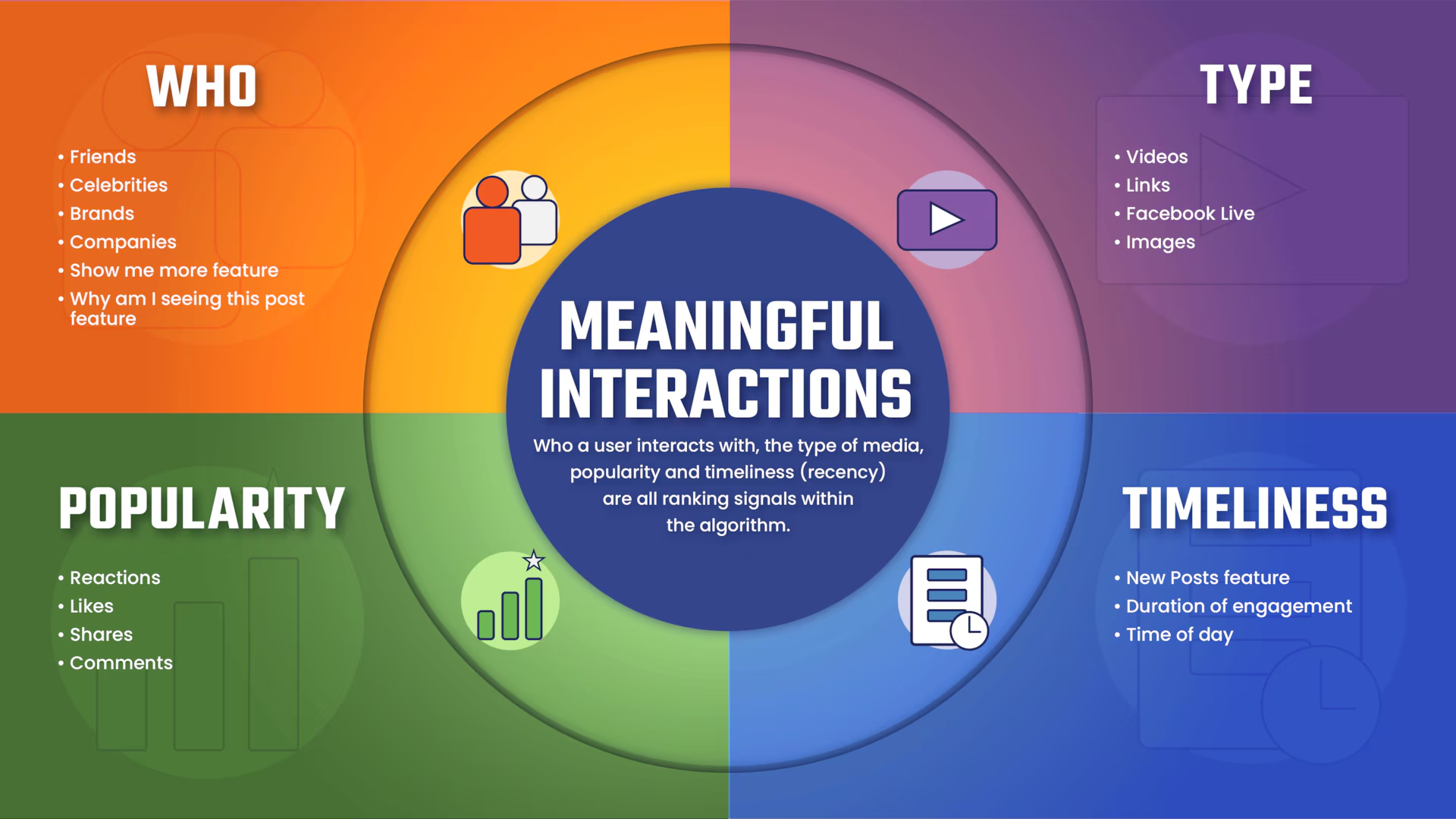
Most social media algorithms use ranking systems based on three core components:
-
User behavior history
-
Content relevance signals
User Behavior History
Algorithms create detailed profiles of each user’s preferences. If someone frequently engages with fitness content, the system increases the likelihood of showing more fitness-related posts.
For instance, if a user regularly interacts with professional development posts on LinkedIn, the algorithm prioritizes similar content in their feed.
Behavior history includes:
-
Topics engaged with
-
Accounts interacted with
-
Content formats preferred (video, carousel, text)
-
Time of day activity patterns
This continuous profiling allows hyper-personalized feed construction.
Content Relevance Signals
Beyond user behavior, algorithms analyze content characteristics such as:
-
Keywords
-
Hashtags
-
Captions
-
Audio tracks
-
Visual recognition elements
-
Metadata
On Meta Platforms, Inc. platforms like Instagram and Facebook, image recognition tools identify objects, scenes, and faces to categorize posts more accurately.
Hashtags act as categorization markers. However, algorithms increasingly rely on contextual understanding rather than hashtags alone.
Predicted Engagement Probability
Machine learning models estimate how likely a user is to engage with a specific post. These predictions are based on historical data patterns.
For example, on X, the algorithm might predict the probability that a user will reply, repost, or like a post based on:
-
Past engagement with similar accounts
-
Interaction frequency with the author
-
Topic alignment
-
Recency of activity
The system assigns a relevance score and ranks content accordingly.
Machine Learning and Artificial Intelligence
Modern algorithms rely heavily on artificial intelligence and machine learning.
These systems:
-
Analyze billions of data points
-
Continuously update ranking models
-
Conduct A/B testing automatically
-
Adjust weighting factors dynamically
Neural networks allow platforms to detect complex patterns in behavior. For instance, they can identify that users who watch 80% of short cooking videos are more likely to engage with restaurant recommendations.
Algorithms are not static. They evolve based on performance metrics and user feedback loops.
The Role of Engagement Weighting
Not all interactions are treated equally. Platforms assign different weights to actions depending on their perceived value.
Typical hierarchy (varies by platform):
-
Shares
-
Comments
-
Saves
-
Likes
-
Clicks
-
Impressions
A share often signals high endorsement, expanding reach beyond immediate followers. Comments indicate conversation potential. Saves suggest long-term value.
For creators and brands, understanding engagement weighting is crucial. Encouraging meaningful interactions rather than vanity metrics can significantly increase visibility.
Time Sensitivity and Recency
Recency still plays a role in algorithmic feeds. Fresh content often receives temporary priority to test performance.
If early engagement metrics are strong, the system expands distribution. If engagement is weak, reach declines rapidly.
This testing phase acts like a performance filter. High-performing posts gain momentum; low-performing ones fade.
Network Effects and Social Graphs
Algorithms also rely on social graph analysis—mapping relationships between users.
If multiple friends engage with a post, the likelihood that you will see it increases. On platforms like Meta Platforms, Inc., friend interactions heavily influence feed ranking.
Social proximity metrics include:
-
Frequency of interaction
-
Message exchanges
-
Profile visits
-
Tagged photos
Closer digital relationships amplify content visibility.
Content Format Preferences
Algorithms detect preferred formats:
-
Short-form video
-
Long-form video
-
Live streams
-
Text-based posts
The rise of short-form video, driven largely by TikTok, reshaped algorithmic strategies across platforms.
Video content generally generates higher engagement signals because it produces measurable watch time and repeat views. As a result, many platforms prioritize video in feed ranking.
Personalization vs. Virality
There are two primary algorithmic pathways:
-
Personalized feed ranking
-
Discovery-based recommendation
Personalized feeds show content from accounts users follow, ranked by predicted interest.
Discovery feeds—like TikTok’s “For You” page—prioritize content from both followed and unfollowed accounts based purely on predicted engagement probability.
This dual approach allows unknown creators to achieve viral reach if engagement metrics are strong.
Negative Signals and Content Suppression
Algorithms also evaluate negative signals, such as:
-
Hiding posts
-
Reporting content
-
Muting accounts
-
Rapid scroll-away
-
Unfollowing
Repeated negative interactions decrease content visibility. Platforms aim to reduce user dissatisfaction by learning from disengagement patterns.
Content flagged as misleading, harmful, or spam may face algorithmic demotion or removal.
The Influence of Advertising Models
Advertising revenue drives platform priorities. Algorithms optimize for ad placement without harming user experience.
User interaction data informs:
-
Ad targeting
-
Interest segmentation
-
Conversion probability
-
Lookalike audiences
If a user frequently engages with fitness content, fitness-related advertisements are more likely to appear.
The more precisely algorithms gauge interaction, the more valuable the advertising ecosystem becomes.
Feedback Loops and Behavioral Reinforcement
Algorithmic systems create feedback loops:
-
User engages with content type A.
-
Platform shows more content type A.
-
User engages further.
-
Preference strengthens.
Over time, feeds become increasingly specialized.
This reinforcement effect increases engagement but may reduce exposure to diverse viewpoints. Critics argue that such systems can create echo chambers.
Transparency and Ethical Concerns
As algorithms grow more sophisticated, questions arise about transparency and fairness.
Key concerns include:
-
Algorithmic bias
-
Manipulation of public opinion
-
Addictive design patterns
Regulatory scrutiny has increased globally. Platforms are under pressure to disclose more about how ranking systems operate.
However, companies often protect algorithmic details as proprietary intellectual property.
Creator Strategies to Optimize for Algorithms
Understanding how algorithms gauge interaction helps creators adapt.
Effective strategies include:
-
Encouraging comments through questions
-
Creating shareable, relatable content
-
Maximizing watch time with strong hooks
-
Posting consistently
-
Analyzing performance metrics
For example, YouTube creators optimize thumbnails and titles to increase click-through rates, while TikTok creators focus on the first few seconds of video to prevent early scroll-away.
Data-driven content strategy aligns with algorithmic priorities.
The Future of Social Media Algorithms
Algorithmic systems are becoming more context-aware and predictive.
Emerging trends include:
-
AI-generated personalization
-
Sentiment analysis
-
Real-time behavior adaptation
-
Cross-platform behavioral tracking
Advancements in machine learning allow more nuanced understanding of emotional responses, voice tone, and even facial expressions in video content.
As artificial intelligence evolves, social media algorithms will likely become even more precise in gauging user interaction.
So remember...
Social media algorithms are complex systems designed to interpret human behavior at massive scale. By analyzing active engagement, passive signals, user history, social connections, and content characteristics, these platforms determine what content appears in each individual’s feed.
Their primary objective is engagement—measured not only by likes and comments but by deeper behavioral signals such as watch time and dwell duration. Machine learning models continuously refine predictions, ensuring feeds remain personalized and addictive.
For users, understanding how these algorithms work can promote more mindful consumption. For creators and brands, it offers strategic advantages in maximizing reach and visibility.
Ultimately, social media algorithms function as behavioral mirrors. They reflect and amplify our interests, habits, and interactions—reshaping digital experiences one engagement signal at a time.