From Dial-Up to Warp Drive
Once upon a time—specifically, 1999—the internet made noises. Actual noises. If you wanted to go online, your computer performed a robotic whale song and hoped for the best. In that era, search engines didn’t just crawl; they strolled. Leisurely. Like they had nowhere important to be.
Back then, major players like Yahoo! and AltaVista were busy cataloging a web that felt big—but was actually adorable by today’s standards. Then along came Google, founded in 1998, flexing a little thing called PageRank and promising to organize the world’s information. Cute goal. Ambitious. Slightly terrifying.
But here’s the kicker: even Google’s early crawlers moved at a pace that modern SEOs would describe as “glacial.” Updates to a website might take weeks to show up in search results. Weeks! Today, that feels like sending a letter by carrier pigeon and hoping it doesn’t get distracted by breadcrumbs.
1999–2004: The Toddler Years of Crawling
When Bots Packed Light and Traveled Slowly
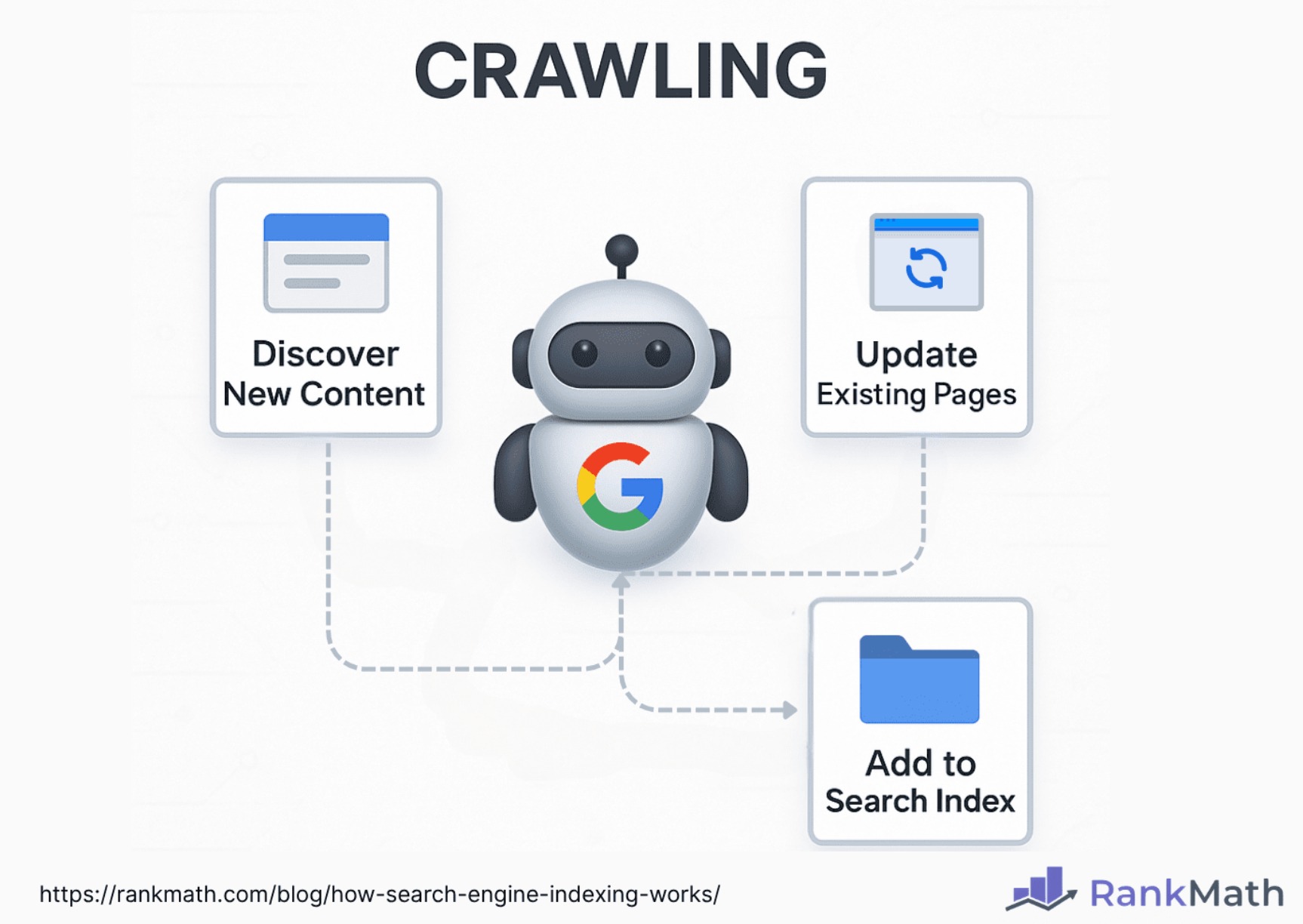
In the early 2000s, search engine crawlers—also known as spiders or bots—had a simple job: visit web pages, read their content, follow links, and stash everything into a giant index. The problem? Bandwidth was limited, servers were moody, and infrastructure wasn’t exactly built for hyperspeed.
Googlebot, even in its infancy, was smarter than many competitors. It prioritized links and authority signals. But crawling still happened in waves. Big waves. Like “monthly deep crawl” waves. If you launched a new website, you might wait patiently while Google slowly discovered it through backlinks or manual submission.
Meanwhile, the web was growing like it had discovered caffeine. More pages meant more crawling. More crawling meant more strain. The engines needed better systems —or they’d drown in HTML.
2005–2010: Infrastructure Hits the Gym
Enter Distributed Computing and Caffeine (Not the Drink)
As the web ballooned, search engines bulked up. Distributed computing allowed massive parallel crawling operations. Instead of one polite bot knocking on doors, fleets of bots fanned out like overachieving delivery drivers during the holidays.
The real breakthrough came in 2010 with Google’s Caffeine update. Despite sounding like something poured into a mug, Caffeine was actually a complete overhaul of Google’s indexing system. It replaced the older batch processing model with a continuous indexing system.
Translation? Instead of waiting for a giant index update, Google could add new content in small chunks, constantly. News articles started appearing in search results within minutes rather than days. Bloggers everywhere rejoiced—and then immediately began obsessing over “indexing speed” as a new competitive sport.
This shift marked the beginning of real-time-ish indexing. The web was no longer being cataloged in sleepy monthly updates. It was being refreshed continuously. Like a never-ending buffet of metadata.
2011–2015: Social Media, Freshness, and the Need for Instant Gratification
The Twitter Effect
The rise of social media platforms like Twitter and Facebook changed expectations. News broke in seconds. Viral content spread in minutes. If search engines couldn’t keep up, they’d look like that one friend who responds to memes three days late.
To adapt, Google enhanced crawling frequency for high-authority and frequently updated sites. News publishers saw bots visit multiple times per hour. For trending topics, content could be indexed within minutes.
This era also saw improvements in crawl budget management. Search engines became more selective. Instead of crawling everything equally, they prioritized pages based on importance, update frequency, and user demand. Bots became strategic rather than hyperactive.
Meanwhile, server infrastructure improved globally. Content delivery networks (CDNs) made websites load faster. Faster loading meant bots could fetch more pages per second. Everyone won—except maybe slow shared hosting providers who suddenly felt very judged.
2016–2019: Mobile-First and Machine Learning Take the Wheel
When Smartphones Became the Boss
By the mid-2010s, mobile traffic surpassed desktop. Search engines had to adapt or risk irrelevance. Enter mobile-first indexing. Google began using the mobile version of a website as the primary version for indexing and ranking.
This required faster, smarter crawling. Websites were dynamic. JavaScript-heavy. Full of interactive elements. Traditional HTML crawling wasn’t enough anymore.
So Google upgraded its rendering capabilities. It essentially taught Googlebot to behave more like a modern browser, capable of rendering JavaScript. This added complexity but also improved accuracy. Indexing became both faster and more sophisticated.
Machine learning also entered the chat. Algorithms could better predict which pages mattered most and when to revisit them. Instead of random or purely scheduled crawling, search engines used data patterns to optimize speed and efficiency.
The result? Many pages began appearing in search results within minutes to hours, depending on site authority and crawl signals. Compare that to 1999’s “check back next month” energy.
2020–Present: The Era of Near Real-Time Indexing
IndexNow and API-Level Speed
The 2020s introduced something radical: websites telling search engines directly when content changes. Rather than waiting for bots to discover updates, site owners could ping engines instantly.
Microsoft’s IndexNow protocol, supported by Bing and later adopted by other players, allowed immediate notification of content updates via API. It’s like texting the search engine: “Hey. I changed something. Come look.”
Meanwhile, Google leaned further into real-time processing for news and trending queries. With massive global data centers and AI-driven prioritization, crawling speed for high-demand content can feel almost instantaneous.
That said, not all pages are equal. A brand-new blog with zero backlinks won’t get VIP treatment. But even then, indexing timelines today are dramatically shorter than two decades ago.
Infrastructure Evolution: The Unsung Hero
Underneath all this speed is infrastructure that would make 1999 engineers weep with joy. Cloud computing, fiber-optic networks, edge computing, and advanced caching systems have multiplied crawling throughput exponentially.
Search engines now operate hyperscale data centers distributed worldwide. Instead of crawling from a single location, they deploy regional bots that reduce latency and increase efficiency.
Think of it as upgrading from one person checking library books manually to a global army of robots scanning entire cities simultaneously.
The Numbers Game: How Much Faster Are We, Really?
While exact crawl speeds are proprietary secrets (search engines guard them like dragons guard gold), practical observations show enormous acceleration.
- Late 1990s: Index updates often took weeks.
- Mid-2000s: Updates could take days.
- Post-2010 (Caffeine): Hours to days for many sites.
- Today: Minutes to hours for authoritative or trending content.
The difference is not incremental—it’s exponential. The scale of the web has increased dramatically, yet indexing delays have shrunk. That’s like doubling the size of a city every year but somehow reducing commute times.
Why Speed Matters (Besides Impressing SEOs)
Fast crawling and indexing mean:
- Breaking news reaches audiences quickly.
- Security issues or misinformation can be updated rapidly.
- Businesses can reflect changes instantly.
- Users get fresher, more relevant results.
Search engines aren’t just competing on relevance; they’re competing on timeliness. If one engine indexes a trending topic ten minutes earlier than another, that advantage matters.
But It’s Not Just Speed—It’s Smart Speed
Modern crawling isn’t about visiting every page every second. That would be chaos. It’s about intelligent prioritization. AI models estimate content value, user demand, and change frequency.
In 1999, crawling was brute force. Today, it’s strategic reconnaissance.
Search engines now evaluate:
- Site authority
- Historical update patterns
- User engagement signals
- Server performance
If your site updates daily, bots learn that rhythm. If it hasn’t changed since 2007 and still features a hit counter, bots might check in occasionally out of nostalgia.
Looking Ahead: Warp Speed or Quantum Crawling?
Could crawling get even faster? Absolutely. With edge computing, AI-driven prioritization, and direct API integrations, indexing may approach real-time for more types of content.
But there’s a balancing act. Crawling consumes energy, bandwidth, and computational resources. Search engines must weigh freshness against efficiency.
Still, compared to the late ’90s, today’s speed feels like science fiction. We’ve gone from bots politely knocking once a month to digital scouts sprinting across the globe 24/7.
Whoosh: From Snail Mail to Supersonic
In 1999, launching a website and seeing it indexed required patience, optimism, and perhaps a lucky backlink from a directory. Today, indexing can happen before you finish tweeting about your new post.
The journey from dial-up crawling to near real-time indexing reflects broader technological evolution: faster networks, smarter algorithms, better infrastructure, and relentless competition.
Search engines didn’t just get faster—they got smarter, more efficient, and infinitely more scalable. And while the web continues to expand at a ridiculous pace, crawling and indexing technology keeps up like an overachiever fueled by infinite espresso.
If 1999’s webmasters could see today’s indexing speeds, they’d probably assume witchcraft. Or at least extremely caffeinated robots.