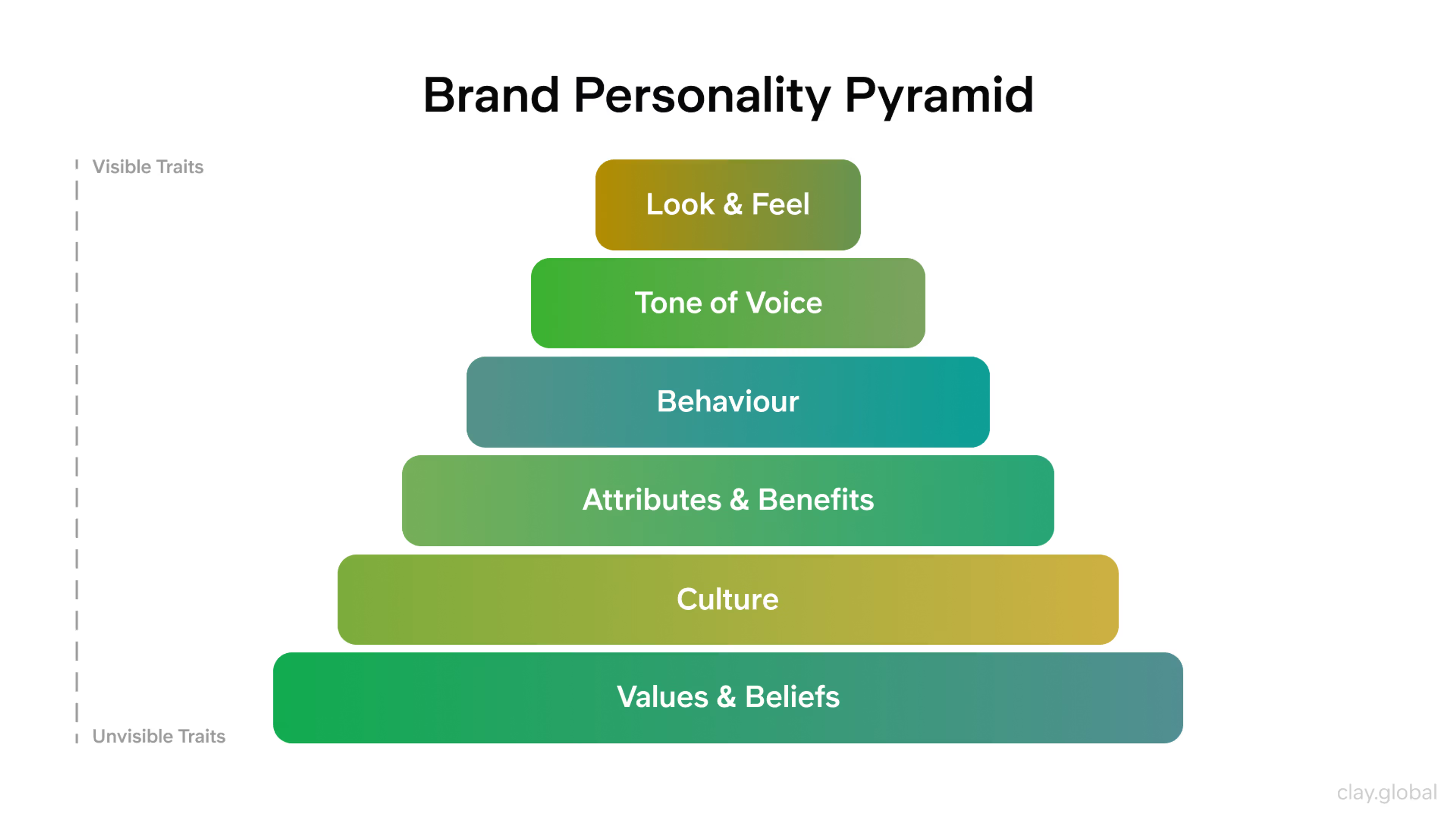
Brand Personality
Brand personality is the set of human characteristics associated with a brand. Just as individuals are perceived as friendly, bold, sophisticated, rebellious, nurturing, or innovative, brands too can embody recognizable traits that shape how people feel about them. In a crowded marketplace where products are often similar in function and price, personality becomes a defining advantage. It transforms a product into a presence and a company into a character.
Consumers rarely form lasting relationships with features. They form relationships with identities. When a brand consistently expresses a distinct personality, it becomes easier to recognize, easier to trust, and easier to remember. Over time, that personality shapes emotional connection, loyalty, and advocacy.
One of the most enduring examples of strong brand personality is Coca-Cola. For more than a century, it has cultivated a consistent identity rooted in optimism, happiness, togetherness, and nostalgia. Examining how this personality was built and sustained provides valuable insight into how any organization can define and express its own.
Understanding the Concept of Brand Personality
Brand personality is not a logo, a slogan, or a color palette. Those are expressions of personality, not the personality itself. At its core, brand personality answers a simple question: if this brand were a person, who would it be?
Psychologists have long categorized human personality traits into dimensions such as sincerity, excitement, competence, sophistication, and ruggedness. Brands often align with one or more of these dimensions to create a clear emotional signal. A financial institution may emphasize competence and security. A luxury fashion house may emphasize sophistication and exclusivity. A technology startup might lean into excitement and innovation.
Without personality, brands become transactional. With personality, they become relational. Personality provides consistency in tone, imagery, storytelling, customer service, and product experience. It creates coherence across every touchpoint.
The Strategic Value of Brand Personality
Brand personality delivers several strategic advantages. First, it creates differentiation. In markets saturated with similar offerings, personality becomes a meaningful separator. Second, it enhances memorability. People remember how a brand made them feel more than what it said. Third, it fosters emotional loyalty. Customers are more forgiving of mistakes and more willing to advocate for brands they feel connected to.
Additionally, brand personality guides internal decision-making. When teams understand the character of the brand, they can make more aligned choices in marketing, partnerships, hiring, and innovation. Personality becomes a filter for consistency.
Coca-Cola demonstrates these principles clearly. Its products can be replicated in taste and price by competitors, but its personality remains uniquely recognizable. The brand does not compete solely on flavor; it competes on feeling.
Coca-Cola’s Core Brand Personality
Coca-Cola’s personality is anchored in sincerity and excitement. It presents itself as friendly, joyful, optimistic, and inclusive. The brand feels like the friend who brings people together at celebrations, holidays, and everyday moments.
From its early advertising to modern campaigns, Coca-Cola has consistently emphasized themes of happiness, sharing, and unity. The brand rarely positions itself as edgy, controversial, or exclusive. Instead, it aims to be universal and welcoming.
This consistency has allowed Coca-Cola to build a personality that transcends generations and geographies. Whether in a small town or a major city, the brand communicates warmth and familiarity.
Building Personality Through Visual Identity
Visual elements play a crucial role in expressing personality. Coca-Cola’s red color palette conveys energy, excitement, and warmth. The flowing script logo adds a sense of friendliness and heritage. Even the iconic contour bottle contributes to personality by suggesting uniqueness and timelessness.
These visual cues are not accidental. They reinforce the brand’s human traits. Red is bold but not aggressive in this context; it feels celebratory. The script typography feels approachable rather than corporate. The design language supports the emotional message.
Organizations seeking to define their brand personality should examine whether their visual systems align with their intended character. A mismatch between personality and design can create confusion.
Storytelling as a Personality Vehicle
Stories bring personality to life. Coca-Cola has repeatedly used storytelling to reinforce its identity. Holiday campaigns featuring families gathering, friends reconnecting, and communities celebrating have become cultural touchstones. These narratives do not focus on ingredients or manufacturing processes. They focus on human connection.
By consistently telling stories about togetherness and joy, Coca-Cola strengthens its association with positive emotions. Over time, consumers begin to associate the beverage itself with shared moments and nostalgia.
This illustrates a broader principle: personality must be dramatized. It cannot remain abstract. Through advertising, content, and experiences, brands must show their personality in action.
Emotional Consistency Across Generations
One of Coca-Cola’s most impressive achievements is maintaining personality consistency while adapting to cultural shifts. The brand has modernized its messaging, embraced digital platforms, and engaged with younger audiences, yet it has preserved its core emotional themes.
This balance between evolution and consistency is critical. A brand that never adapts risks irrelevance. A brand that constantly reinvents its personality risks losing recognition. Coca-Cola demonstrates how to refresh expression without abandoning identity.
For organizations, this means identifying the non-negotiable traits at the heart of their personality and allowing flexible execution around them.
Brand Personality and Emotional Memory
Emotional memory is a powerful driver of brand loyalty. When consumers associate a brand with positive life moments, that association deepens attachment. Coca-Cola has intentionally positioned itself within celebrations, sporting events, family gatherings, and holidays. By embedding itself into these emotionally charged contexts, it strengthens long-term memory connections.
This strategy highlights an important insight: personality is amplified when it intersects with meaningful life experiences. Brands should identify moments where their character can authentically participate in customers’ lives.
Internal Culture and Personality Alignment
Brand personality cannot exist solely in external communication. It must be reflected internally. Employees are ambassadors of personality. Their tone, behavior, and decision-making either reinforce or contradict the intended character.
Coca-Cola’s emphasis on optimism and community extends into its corporate culture and global initiatives. While no organization is perfect, alignment between external personality and internal values strengthens credibility.
Companies building brand personality should ensure that hiring practices, leadership communication, and employee engagement strategies support the same traits expressed publicly.
Adapting Personality to Global Markets
Operating in diverse cultural contexts presents challenges for maintaining consistent personality. Coca-Cola operates in numerous countries with varying traditions and values. Yet the brand manages to adapt local messaging while preserving universal themes of happiness and unity.
This demonstrates that personality can be universal even when execution is localized. The core character remains stable, while imagery, language, and context shift to reflect local culture.
Brands expanding globally should define personality traits that resonate broadly and allow creative flexibility in expression.
Risks of Weak or Inconsistent Personality
When a brand lacks clear personality, it risks blending into the background. Inconsistent personality can be even more damaging. If a brand appears playful in one campaign and formal in another without intention, consumers may struggle to form a coherent perception.
Inconsistency erodes trust. Trust depends on predictability. A strong personality provides that predictability.
Coca-Cola’s long-term success underscores the value of unwavering clarity. While marketing styles evolve, the brand’s emotional tone remains recognizable.
Defining Your Own Brand Personality
Organizations seeking to define their personality should begin with introspection. What values drive the company? What emotional needs does it serve? What characteristics would make customers feel understood and inspired?
It can be helpful to articulate three to five core personality traits. For example: optimistic, dependable, innovative, compassionate, bold. These traits should guide tone of voice, design choices, partnerships, and customer interactions.
Research also plays a role. Understanding how customers currently perceive the brand can reveal gaps between intention and reality. Alignment between aspiration and perception is essential.
Expressing Personality Through Voice and Language
Language is a primary carrier of personality. Coca-Cola’s messaging often uses inclusive, uplifting language that emphasizes shared experiences. The tone feels warm rather than technical. Even short taglines communicate positivity.
Brands must define voice guidelines that reflect their chosen traits. A playful brand may use conversational phrasing and humor. A sophisticated brand may use refined, elegant language. Consistency across websites, social media, advertising, and customer support reinforces personality.
Experiential Reinforcement of Personality
Personality becomes most powerful when it shapes experiences. Packaging, events, sponsorships, and community initiatives can all reinforce character. Coca-Cola’s presence at global sporting events aligns with its energetic and unifying image. Seasonal packaging reinforces celebration and nostalgia.
Every touchpoint is an opportunity to embody personality. When experiences align with messaging, emotional credibility strengthens.
Measuring the Impact of Brand Personality
While personality is intangible, its impact can be measured indirectly. Brand awareness, emotional sentiment analysis, customer loyalty metrics, and advocacy rates provide insight into how well personality resonates. Qualitative feedback often reveals emotional descriptors that indicate successful positioning.
If customers describe a brand using the intended traits, personality alignment is likely strong. If descriptions vary widely, refinement may be needed.
The Future of Brand Personality
As markets become increasingly digital and automated, brand personality may become even more important. Automation can standardize processes, but personality humanizes interactions. In an age of artificial intelligence and rapid technological change, people continue to seek emotional connection.
Coca-Cola’s enduring relevance suggests that human-centered identity remains powerful even amid innovation. The brand adapts channels and formats but preserves emotional character.
Remember: Personality as Long-Term Equity
Brand personality is not a cosmetic layer added to marketing materials. It is a strategic asset that shapes perception, loyalty, and differentiation. When clearly defined and consistently expressed, it transforms a company from a provider of products into a meaningful presence in people’s lives.
Coca-Cola exemplifies how sustained commitment to a joyful, optimistic, and inclusive personality can create generational equity. Its success illustrates that personality, when aligned with storytelling, design, culture, and experience, becomes more than positioning. It becomes identity.
For organizations seeking enduring relevance, the lesson is clear: define who you are, express it consistently, and embed it into every interaction. In doing so, you will not simply build recognition. You will build relationship. And relationships, grounded in authentic personality, are the foundation of lasting brands.