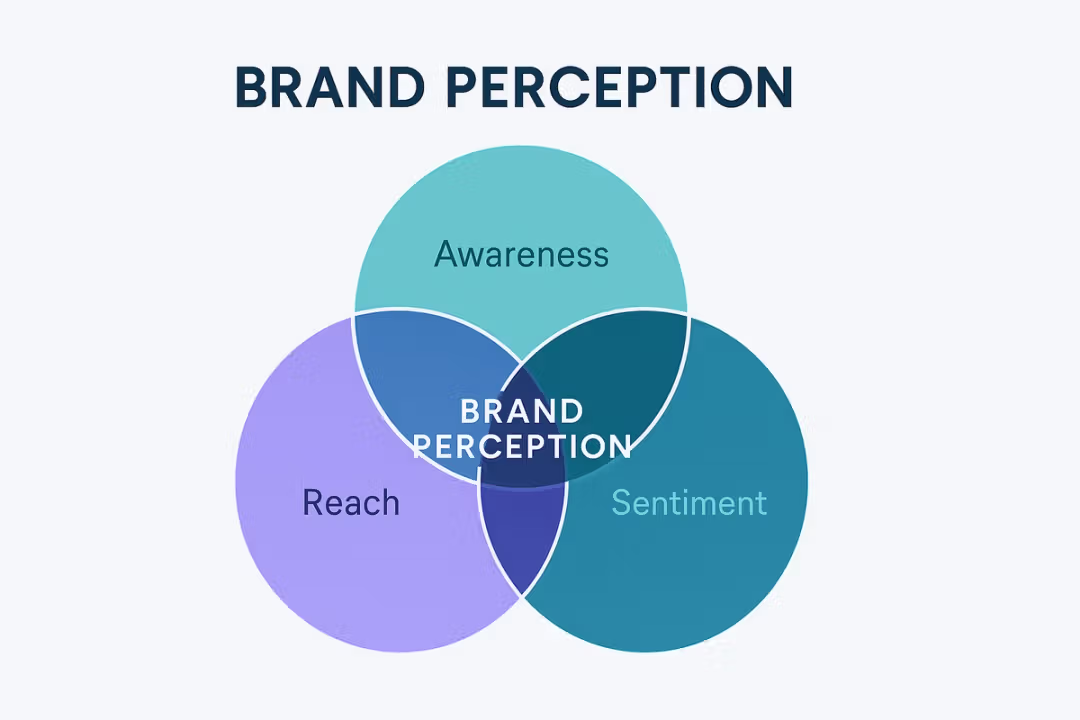
Brand Perception
Brand perception is one of the most powerful yet intangible forces in business. It lives not in boardrooms, marketing plans, or product packaging—but in the minds of consumers. It is the sum of beliefs, emotions, impressions, and expectations that people associate with a company, product, or service. While organizations can carefully design logos, craft messaging, and engineer customer experiences, they do not ultimately control their brand perception. Customers do.
Understanding brand perception is essential because it influences nearly every measurable outcome in business: purchasing decisions, customer loyalty, pricing power, word-of-mouth referrals, employee attraction, and even investor confidence. In highly competitive markets where products are increasingly similar in function and price, perception often becomes the deciding factor.
This article explores what brand perception is, how it forms, why it matters, what influences it, how it can be measured, and how organizations can strategically shape it over time.
What Is Brand Perception?
Brand perception is the way consumers think and feel about a brand based on their interactions, experiences, and exposure to information about it. It is not what a company says about itself—it is what others believe to be true.
Importantly, perception may or may not align with reality. A brand might deliver high quality at low prices, yet be perceived as “cheap.” Another might offer average quality but be seen as premium due to strong storytelling and design. Perception often outweighs objective facts because humans rely heavily on emotion and cognitive shortcuts when making decisions.
Brand perception includes:
-
Emotional associations (trust, excitement, security, prestige)
-
Rational judgments (quality, value, reliability)
-
Social meaning (status, identity, belonging)
-
Ethical impressions (sustainability, fairness, transparency)
-
Cultural relevance (modern, traditional, innovative)
In essence, brand perception answers a simple but powerful question: What does this brand mean to me?
Why Brand Perception Matters
1. It Drives Purchasing Decisions
Consumers rarely make decisions purely on features and specifications. Instead, they choose brands that align with their values, aspirations, and emotions. When two products are similar in functionality, perception becomes the differentiator.
A positive perception increases trust, and trust reduces perceived risk. The lower the perceived risk, the more likely a consumer is to buy.
2. It Creates Pricing Power
Brands with strong, positive perceptions can command premium pricing. Customers are often willing to pay more for brands they associate with higher quality, prestige, reliability, or emotional satisfaction.
Conversely, brands with weak or negative perceptions are often forced to compete primarily on price, eroding margins and long-term sustainability.
3. It Builds Loyalty and Advocacy
Positive brand perception fosters emotional attachment. Emotionally connected customers are more likely to repurchase, forgive mistakes, and recommend the brand to others. Word-of-mouth advocacy is particularly powerful because it is perceived as more credible than advertising.
4. It Influences Talent and Partnerships
Brand perception extends beyond customers. Prospective employees, investors, suppliers, and partners also form impressions. A company perceived as innovative, ethical, and forward-thinking attracts stronger talent and strategic opportunities.
5. It Acts as a Buffer in Crisis
Brands with strong positive perception often receive the benefit of the doubt during crises. Customers may attribute mistakes to temporary issues rather than systemic flaws. In contrast, brands with weak reputations can suffer disproportionate backlash from minor missteps.
How Brand Perception Is Formed
Brand perception develops over time through repeated exposures and experiences. It is shaped by both direct and indirect influences.
Direct Experiences
Personal interactions have the strongest impact. These include:
-
Product quality and performance
-
Customer service interactions
-
Website usability
-
In-store environment
-
Delivery and fulfillment reliability
A single negative experience can significantly damage perception, while consistent positive experiences gradually strengthen it.
Marketing and Communication
Advertising, social media content, public relations, and brand storytelling influence expectations. Visual identity, tone of voice, and messaging consistency contribute to how a brand is categorized in the consumer’s mind.
However, communication sets expectations—it does not guarantee perception. If the experience fails to match the promise, perception declines.
Social Influence
People rely heavily on the opinions of others. Reviews, testimonials, influencer endorsements, and peer recommendations all shape perception. In the digital age, online ratings and user-generated content play an outsized role.
Media and Public Narrative
News coverage, viral stories, and cultural conversations can rapidly reshape perception. A single viral incident can redefine public opinion in hours.
Cultural and Social Context
Perception is filtered through cultural norms and societal values. What resonates positively in one market may be viewed negatively in another. Brands must remain sensitive to shifting cultural dynamics.
Key Components of Brand Perception
While brand perception is complex, several core dimensions consistently influence it:
1. Trust
Trust is foundational. Consumers must believe that a brand delivers on its promises. Transparency, consistency, and accountability strengthen trust over time.
2. Quality
Perceived quality often matters more than objective quality. Packaging, design, price positioning, and branding cues influence how quality is interpreted.
3. Value
Value is not the same as low price. It reflects the balance between what is given (money, time, effort) and what is received (benefits, satisfaction, prestige).
4. Emotional Connection
Brands that evoke emotion—joy, nostalgia, excitement, security—create deeper attachment. Emotional branding fosters long-term loyalty.
5. Differentiation
If a brand is not perceived as meaningfully different, it risks becoming interchangeable. Clear positioning helps consumers understand why it matters.
6. Social and Ethical Responsibility
Modern consumers increasingly evaluate brands based on environmental sustainability, social impact, and corporate ethics. Authenticity is crucial; performative efforts can backfire.
The Gap Between Brand Identity and Brand Perception
Brand identity refers to how a company wants to be seen. Brand perception reflects how it is actually seen. When these two align, branding efforts are effective. When they diverge, confusion and distrust emerge.
For example, a company may position itself as customer-centric, yet long wait times and unhelpful support contradict that message. The inconsistency damages credibility.
Closing the gap requires:
-
Honest internal assessment
-
Alignment between messaging and operations
-
Continuous feedback collection
-
Adaptation based on insights
Authenticity is the bridge between identity and perception.
Measuring Brand Perception
Because brand perception is intangible, measurement requires both quantitative and qualitative approaches.
Surveys and Brand Tracking
Regular surveys assess awareness, associations, trust levels, and customer sentiment. Tracking changes over time helps identify trends.
Net Promoter Score (NPS)
NPS measures customer willingness to recommend a brand. While simple, it provides insight into overall perception and loyalty.
Social Listening
Monitoring social media conversations reveals how consumers discuss the brand in real time. Sentiment analysis tools can detect patterns in positive and negative language.
Reviews and Ratings
Online reviews provide unfiltered feedback. Patterns in complaints or praise highlight perception strengths and weaknesses.
Customer Interviews and Focus Groups
In-depth conversations uncover emotional drivers and nuanced impressions that surveys might miss.
Measurement should be continuous, not occasional. Perception evolves, and brands must monitor it consistently.
Strategies to Improve Brand Perception
Improving brand perception is a long-term commitment. It requires coordinated effort across the entire organization.
1. Deliver Consistent Quality
Operational excellence forms the foundation. No marketing campaign can compensate for poor product or service quality.
2. Clarify Positioning
Brands should articulate a clear value proposition and unique positioning. Ambiguity leads to weak perception.
3. Align Internal Culture
Employees are brand ambassadors. Their attitudes, behaviors, and engagement directly influence customer experiences. Internal culture must reflect external messaging.
4. Embrace Transparency
Open communication about challenges, pricing, policies, and mistakes builds trust. Consumers appreciate honesty.
5. Invest in Customer Experience
Every touchpoint contributes to perception. Mapping the customer journey and eliminating friction improves overall impressions.
6. Respond to Feedback
Listening is not enough—brands must act on feedback. Visible improvements signal that customer voices matter.
7. Build Emotional Narratives
Storytelling humanizes brands. Narratives about mission, values, or customer impact create emotional resonance.
The Role of Digital Transformation
Digital channels have dramatically amplified the speed and scale at which brand perception forms and changes. A single social media post can influence millions. Online transparency means companies cannot easily control narratives.
At the same time, digital platforms provide opportunities to engage directly with audiences, personalize communication, and build community. Brands that use digital tools thoughtfully can strengthen perception through authentic interaction.
However, digital missteps—tone-deaf messaging, delayed responses, or data breaches—can quickly damage trust. The digital environment demands vigilance and responsiveness.
Rebranding and Perception Reset
When brand perception becomes deeply negative or outdated, companies sometimes pursue rebranding. This may involve new visual identity, revised messaging, product improvements, or cultural transformation.
Rebranding alone cannot change perception if underlying issues persist. A new logo does not erase poor service or ethical concerns. Genuine operational and cultural changes must precede or accompany any external transformation.
Successful perception resets occur when:
-
Leadership commits to meaningful change
-
Stakeholders see evidence of improvement
-
Communication acknowledges past shortcomings
-
Actions consistently reinforce new positioning
Long-Term Versus Short-Term Thinking
Brand perception is cumulative. It builds gradually and can erode quickly. Short-term marketing tactics aimed solely at boosting immediate sales can sometimes damage long-term perception if they compromise authenticity or trust.
Sustainable brand management requires balancing performance metrics with reputation considerations. Every campaign, partnership, and decision contributes to the overall narrative.
Companies that prioritize long-term brand equity often experience more stable growth and resilience.
The Psychological Foundations of Brand Perception
Human psychology plays a central role in shaping perception. Several cognitive principles are especially relevant:
-
Halo Effect: A positive impression in one area (e.g., sleek design) influences perception in other areas (e.g., quality).
-
Confirmation Bias: Consumers seek information that supports existing beliefs about a brand.
-
Social Proof: People trust what others appear to trust.
-
Availability Heuristic: Memorable events (positive or negative) disproportionately affect perception.
Understanding these principles allows marketers to design experiences that align with natural human decision-making processes.
A Core Strategic Asset
Brand perception is not a marketing accessory—it is a core strategic asset. It influences revenue, loyalty, pricing, talent acquisition, and crisis resilience. Unlike tangible assets, it cannot be directly owned or controlled. It must be earned through consistent action, authentic communication, and meaningful value creation.
In a world of information abundance and intense competition, perception often defines reality. Consumers choose brands not only for what they do, but for what they represent. Organizations that understand this distinction—and manage perception intentionally—gain a powerful competitive advantage.
Ultimately, brand perception reflects a relationship. It is built through trust, reinforced through experience, and sustained through integrity. Companies that treat it as a long-term commitment rather than a short-term campaign are best positioned to thrive in dynamic markets.
The brands that endure are those that recognize a simple truth: while products can be copied and prices can be matched, perception—once deeply rooted in the minds of consumers—becomes one of the most defensible assets a business can possess.